ERP & CRM

Streamline operations, manage customer relationships, and grow your business with powerful ERP & CRM solutions.

What Is Enterprise Resource Planning?
Enterprise resource planning or ERP refers to the process of integrating resources, information, and communication across various internal departments of a company. These subdivisions include human resources, finance, marketing, sales, inventory management, etc. Businesses mostly use ERP software to integrate and streamline processes that enhance their work efficiency and decision-making.
Enterprise resource planning software allows companies to automate certain processes and simultaneously accommodate new ones to achieve better coherency and professionalism. The software complements the requirements and goals of a company that can help a business achieve quicker access to information from different departments, communicate across departments swiftly, and practice cost-effectiveness.
How Does An Enterprise Resource Planning System Work?
Enterprise resource planning systems aim to create a culture to manage business processes in real-time by using software and IT applications, on-premise or hybrid systems. Thus, ERP systems focus on improving savings in terms of finance, time, and manual labor.
Enterprise resource management applications collect, process, store in the cloud, and manage all of the data from different departments of the business, eliminating the hassle of collating data. However, compared to ERP systems, manual work takes longer to collect, process, and streamline data, which delays decision-making.
In the case of ERP applications, everyone from managers to employees can access information in real-time, cohesively, and across departments. The flow of communication is streamlined to eliminate the time-taking process of gathering disparate information from multiple sources.
Collecting data from various departments like manufacturing, inventory and order management, customer services, sales and marketing, finance, etc., brings greater efficiency and accuracy in decision-making. In addition, ERP applications eliminate the possibility of human error. At the same time, an ERP system can better explain the data by employing graphs, pie charts, percentages, and tabular formats per the company’s needs.
Characteristics of ERP
- Availability of Data in Real Time
- Centralized Data Processing
- Flexibility and Transparency of Data
- Automatic Information
- Customized Look and Features
ERP Types
Enterprise resource planning systems can be specific from company to company, while a company can adopt more than one type of ERP system, such as,
On-premises Software
Companies or businesses using this software maintain it within office premises, either physically or internally, on in-office computers and servers. However, these are not accessible remotely, but complete ownership and control are with the business.
Cloud Software
Such cloud-based or web-based ERP systems are remotely accessible on any device with an internet connection and are known as – Software as a Service or SaaS. It is a subscription-based service for which the service provider ensures training, support, and customization.
Hybrid Software
This software combines the above two software services. It depends on how the user organization and service provider host and deploy these, respectively. This type has greater flexibility and allows for newer addition and implementations in the existing systems.

Benefits
In the final analysis, let us now understand some benefits of ERP systems. These will help in understanding how ERP assists an organization’s long-term vision of growth and expansion,
- Automation and Integration of Information
- Increases Productivity
- Reduces Operations Cost
- Gives Edge Over Competitors
- Strengthens Data Security

What is CRM?
CRM stands for Customer Relationship Management. It is a set of strategies businesses deploy to improve their relations with leads and customers.
The term CRM is widely used to denote CRM software—a tool designed to manage interactions with buyers and optimize/automate the selling process.
Read on to find out some interesting facts about CRM and how it can help improve your business operations.
How does CRM Software Help your Business?
- Lead capture
- Lead distribution
- Lead management
- Tracking sales
- Analytical insights
- Automate processes
Types of CRM
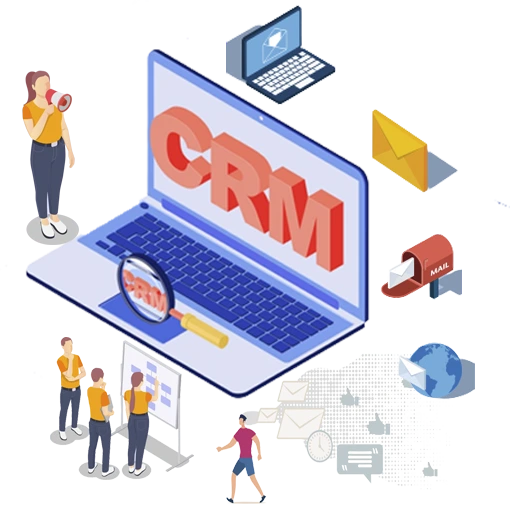
CRM systems have evolved to manage business relations with customers as well as align teams and processes and utilize interaction data to make business decisions.
Operational CRM
This CRM category streamlines a company’s customer-facing operations—mainly sales, marketing, and customer service.
Marketing automation CRM: Covers lead capturing, nurturing, managing email and SMS campaigns, marketing workflow automation, and campaign reports.
Sales CRM: Covers lead and sales process management, sales automation, and opportunity management.
Customer service CRM: Covers capturing and distributing support queries and reporting.

Collaborative CRM
A collaborative CRM integrates multiple business functions, like sales, marketing, inventory, etc., in one platform. Tasks like contact management and channel sales management are simplified with collaborative CRM.

We are ready to serve those CRM:
It is meant for B2B companies with comparatively lesser lead volume. They are built to manage longer sales cycles. Customizable CRM tools are better suited for B2B needs.
- B2B CRM
- B2C CRM
- On-premise CRM
- Cloud CRM
- Mobile CRM
- Open-source CRM
Node JS Development
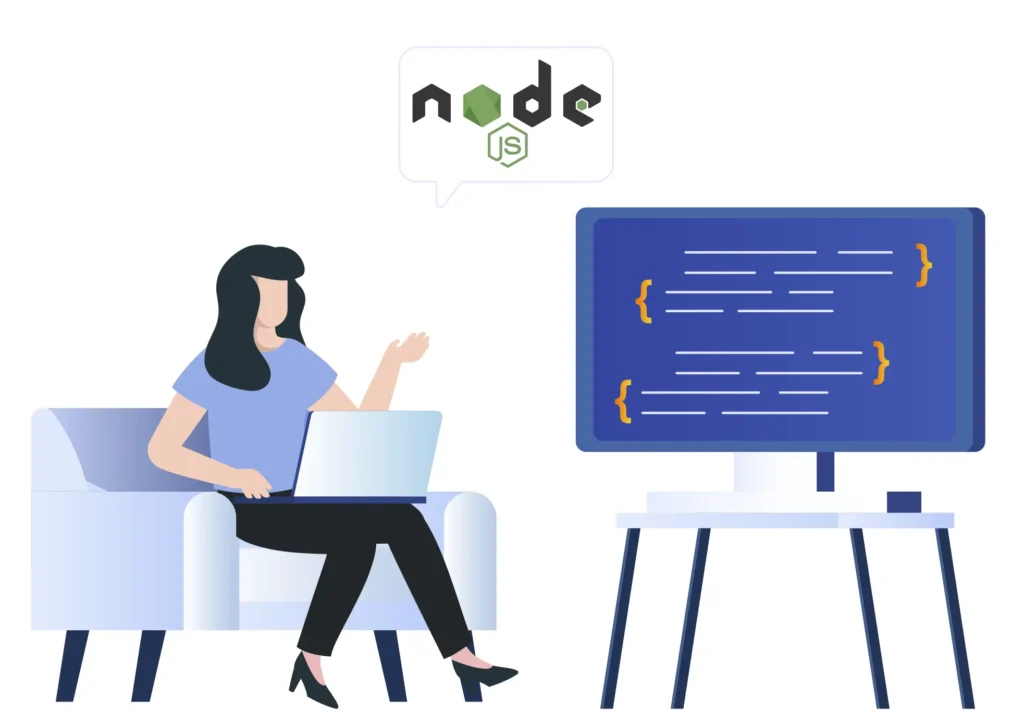
Node.JS is the leading server environment to develop agile and scalable network applications, Android apps, and iOS apps.
Not getting a professional team for handling your stuff for Node.JS app development or Node web development?
We at ASK Innovations offer the services provided by our expert team who are continuously working on:
- Node.JS Consulting Services
- Node.JS Mobile Development
- Node.JS API Development
- Node.JS WebApp Development
Php Development
PHP offers one of the most comprehensive feature sets. With our expertise at ASK Innovations, we create a wide range of interactive web products that gain customer trust.
We provide services to both small and large enterprises.
We at ASK Innovations offer you reliable, accessible, and cost-effective PHP programming services, having the experienced team in PHP-based frameworks,
We are ready to serve:
- Custom PHP Application Development
- PHP CMS Development
- PHP and Flash/Flex Integration
- Custom PHP Programming

React Js
At ASK Innovations the team of ReactJS developers creates flexible applications that give clients a competitive edge by utilising the foundational components of this cutting-edge frontend framework and using strategic methods to identify key elements of client products and make necessary adjustments from their perspective on time.
ASK Innovations aims to focus on the vital components, toolkits, and React API libraries that are required to build the smoothest interactive and lightweight applications for the users.
Our team made the first move to meet their demands while offering the services below :
- App Modernization
- Migration to React
- Technical Modification
- UI/UX Development
- Custom React.JS